Drone Pre-Flight Checklist: 12 Checks Before Every Flight
The 12-point drone pre-flight checklist every serious pilot runs before takeoff — airspace, weather, batteries, Remote ID and more. 14 CFR 107.49 compliant, free printable inside.
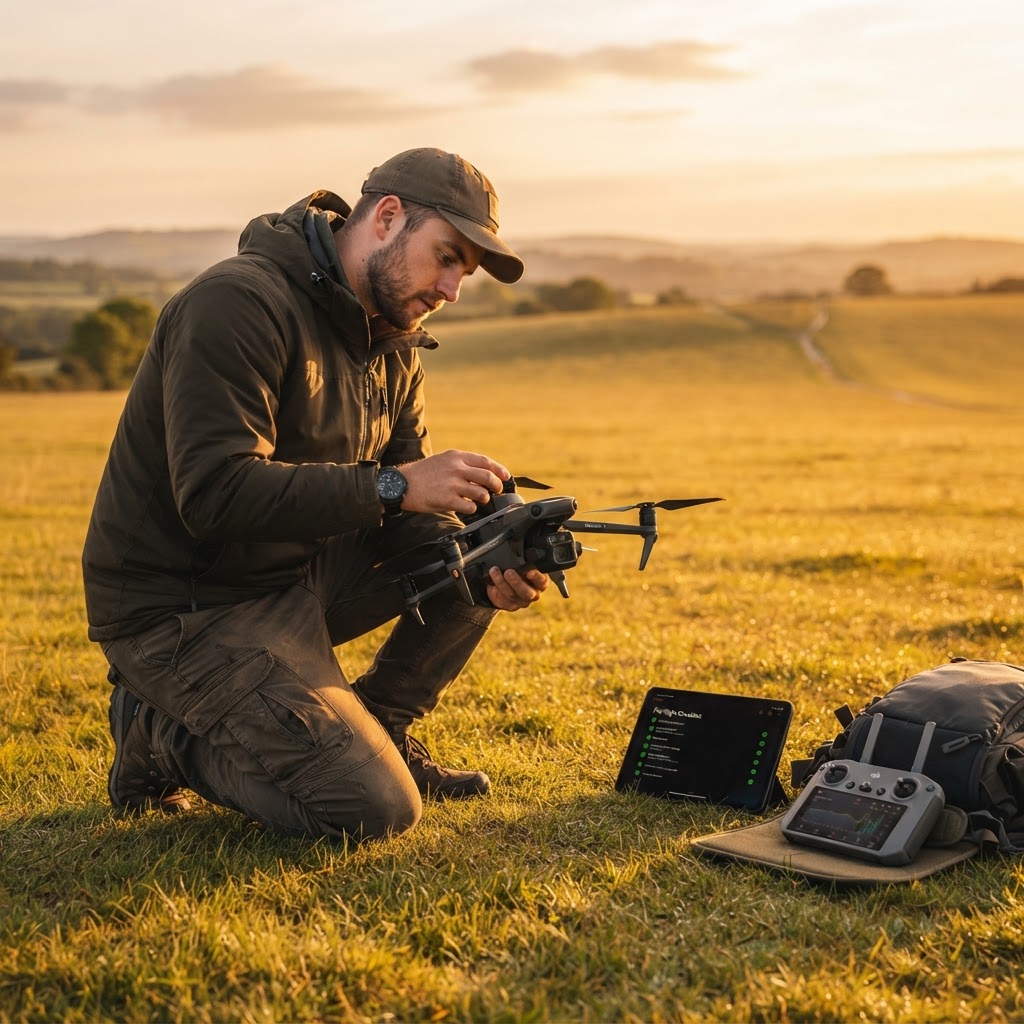
Every serious pilot runs the same routine before takeoff. Not because it's fashionable — because the FAA requires it. Under 14 CFR 107.49, every Part 107 pilot must inspect their drone and assess the operating environment before each flight.
The good news: it takes five minutes. The better news: this exact routine prevents most of the crashes, flyaways, and FAA headaches pilots deal with every year.
Run it every time. The day you skip it is the day the propeller is loose.
The drone pre-flight checklist: 12 checks
- Airspace & restrictions — Confirm your airspace class, check for controlled airspace, and get authorization if needed. Run a free instant check with SkyScore.
- Weather & wind — Check wind speed and gusts, precipitation, visibility, and temperature. Rule of thumb: keep sustained wind below two-thirds of your drone's max speed.
- NOTAMs & TFRs — A temporary flight restriction can appear overnight. Stadiums, VIP movement, wildfires — check before you leave, not at the field.
- Batteries — Drone, controller, and phone charged and healthy. Cold weather? Warm batteries to at least 15°C before takeoff. (See our battery maintenance guide.)
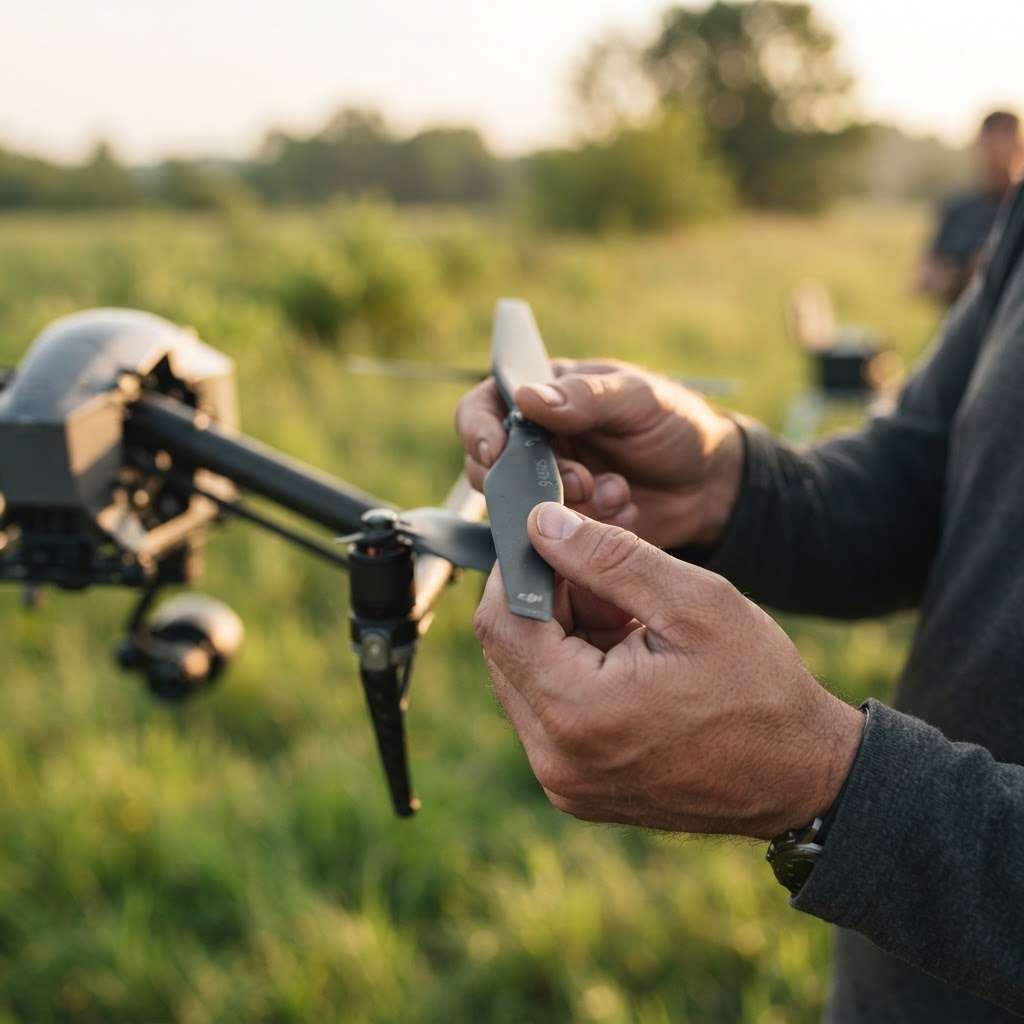
- Propellers — No cracks, chips, or stress marks. Mounted correctly and tight. One damaged prop can end a flight in seconds.
- Airframe & gimbal — No cracks, loose arms, or debris. Gimbal guard removed, sensor lenses clean.
- Firmware & calibration — Firmware up to date, compass and IMU calibrated, SD card formatted with enough space.
- Controller link & GPS — Strong signal lock before takeoff; know your fly-away behavior if the link drops.
- Remote ID — Broadcasting correctly if your drone requires it (in the US: most drones flown under Part 107 must comply with the Remote ID rule).
- Site survey — Obstacles, power lines, people, animals, and a clear takeoff/landing zone. Walk the area if you can.
- Crew & bystanders — Brief your observer and camera operator. Keep bystanders clear. Know who aborts a flight, and how.
- Return-to-home & limits — Home point set, RTH altitude above the tallest obstacle, max altitude and distance set for this location.
Pro tip: screenshot or print this list and keep it in your case. Download the free printable version.
Why the legal angle matters
Recreational flying has no checklist law, but recreational flyers must follow all safety guidelines under the Exception for Limited Recreational Operations. And if you ever fly for money — even one Instagram shoot — you need Part 107 and the full 107.49 pre-flight assessment. Our Part 107 guide walks you through the license; the checklist above is your daily proof of compliance.
The five mistakes that cause most incidents
- Skipping the gust check — averages lie, gusts don't
- Flying with yesterday's firmware update unreviewed
- Assuming yesterday's NOTAM data is still current
- Taking off from tall grass (unstable sensors, blocked VLOS)
- No abort criteria: "we'll see how it goes" is not a flight plan
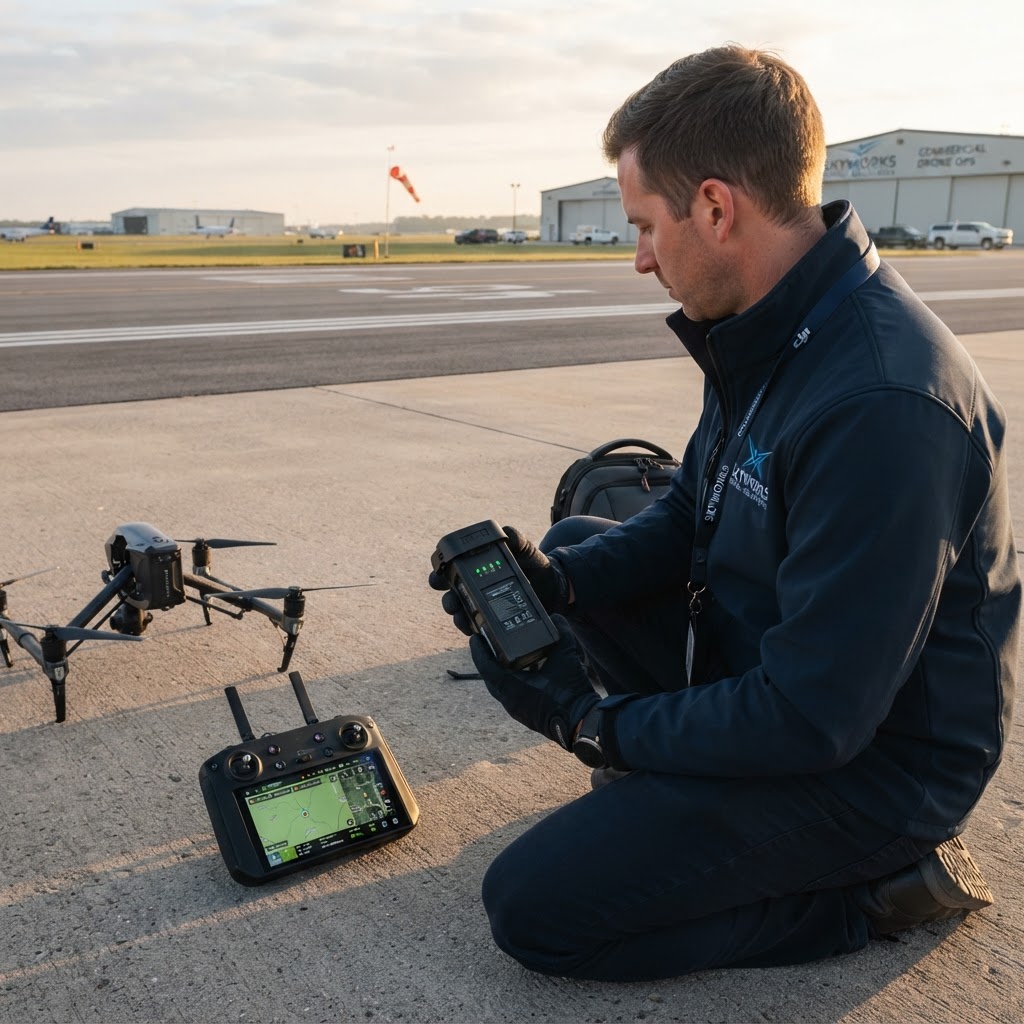
Before every flight, in 30 seconds
Don't want to check six apps before you fly? SkyScore gives you an instant airspace risk assessment — airspace class, weather, and compliance checks in seconds — and your flight history lives in your Digital Drone Passport. One workspace, every pre-flight box ticked.
Ready to make pre-flight a 30-second habit? Start your 7-day free trial.
Frequently asked questions
Does Part 107 require a pre-flight checklist?
Yes — 14 CFR 107.49 requires every remote pilot to inspect the aircraft and assess the operating environment before each flight. A written checklist is the simplest way to prove compliance.
What wind speed is too high for a drone?
Keep sustained wind below two-thirds of your drone's maximum speed; gusts below its max. For most consumer drones, avoid sustained winds above ~20 mph (32 km/h).
Do recreational flyers need this too?
No law requires a checklist for recreational flying, but the same safety checks apply — and recreational flyers must follow all safety guidelines.
How do I check if I'm allowed to fly somewhere?
Check airspace class, controlled-airspace authorization, and NOTAMs/TFRs before departure. SkyScore does all three in one instant check.
Planning to fly abroad? Local rules differ — start with our global drone laws overview.
Explore Dronable Tools
Stay Safe on Every Flight
Access pre-flight checklists, compliance tools, and safety resources in the Dronable Toolkit — included with every membership.
Open ToolsFree: How to Start a Drone Business
The complete step-by-step guide to turning your passion for flying into a profitable drone business — completely free.
- 10 steps to launching your drone business
- 51 proven drone business ideas
- How to get FAA certified (Part 107)
- Pricing, clients & recurring income
Join the Dronable Newsletter
Get drone tips, new articles, and exclusive deals straight to your inbox. No spam, unsubscribe anytime.